
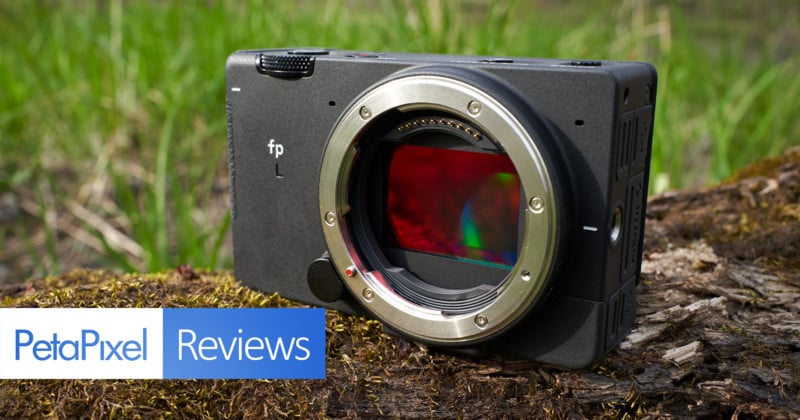
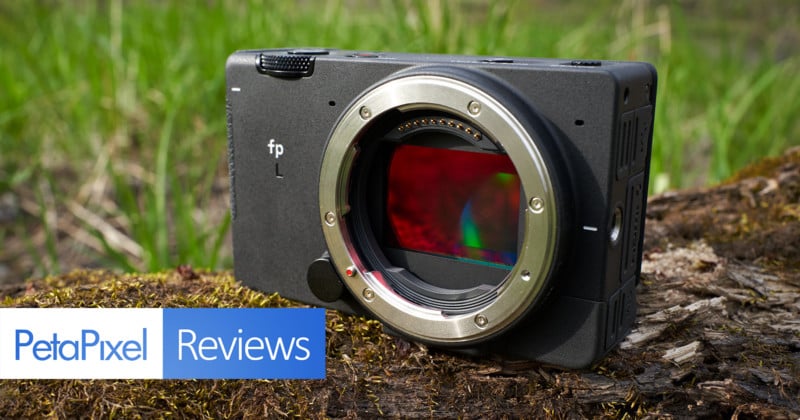
Making cameras is a tough gig. Every release demands to stand out from the crowd in some way. For the Sigma fp L, it’s turning heads by the remarkably compact size and resolution-dense full-frame sensor. Is it enough?
The Sigma fp L is barely wider than the lenses that get attached to it and sports a whopping 61-megapixel full-frame backside-illuminated sensor. It shares many of its other design aspects with the previous 24-megapixel fp model that debuted in 2019, and both have staked their claim as being the smallest and lightest full-frame cameras available today. With an increase of megapixels comes an increase in price, and the fp L is $800 more expensive at the time of publication: $2,500.
Build Quality and DesignWhen I first unboxed the Sigma fp L, I was immediately surprised at how great it looked and felt. It’s a compact-sized camera, but unlike any other small camera I’ve used, there’s some heft-to-size ratio happening which triggers my caveman brain into thinking it feels high quality. All the materials feel really nice as well, including the matte finish and the faux leather on the grip side. Almost all the buttons and switches have satisfying clicks, and the top dial has just the right amount of tension. There are two exceptions with the review unit I borrowed: the rear dial is a little sloppy for my taste and the down button on this dial feels notably softer than the other directions and doesn’t have a pronounced click.
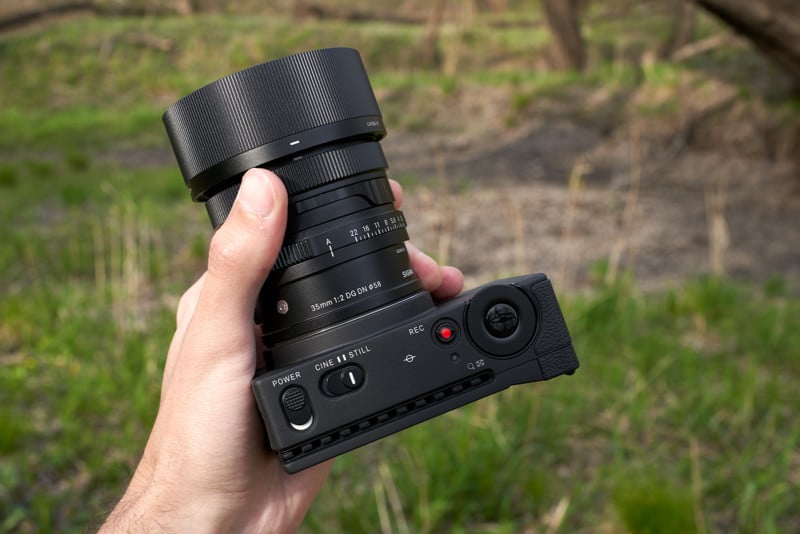
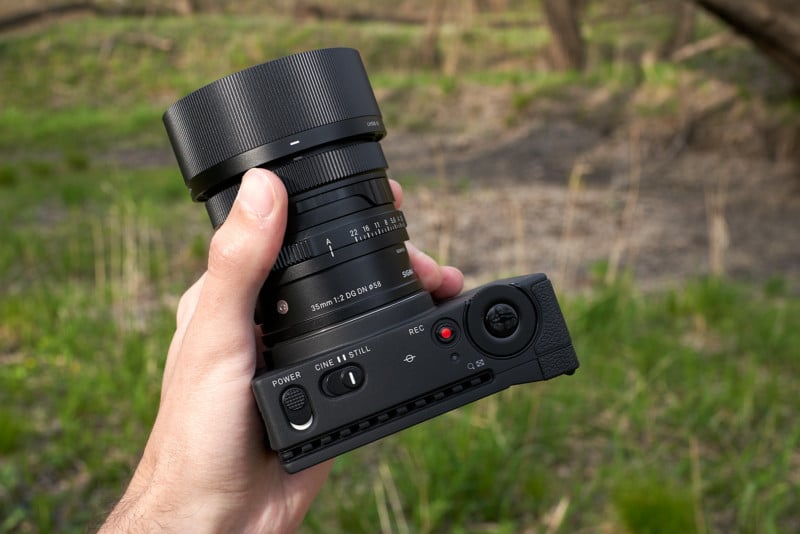
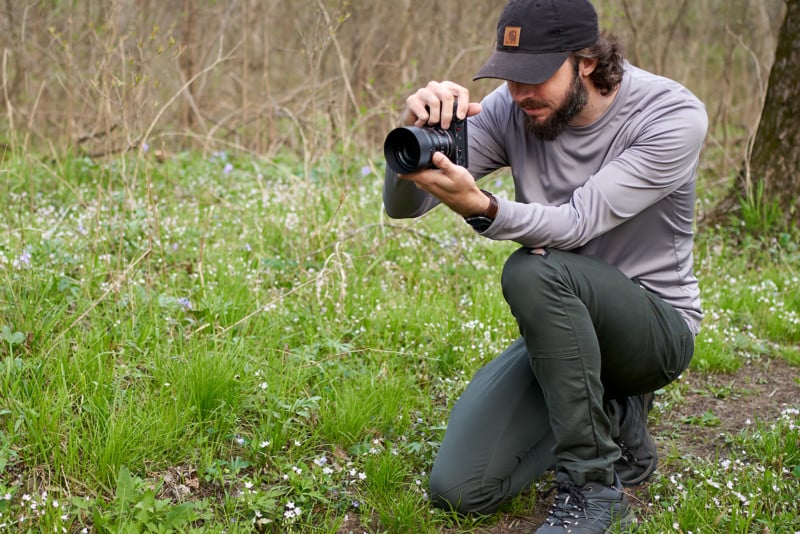
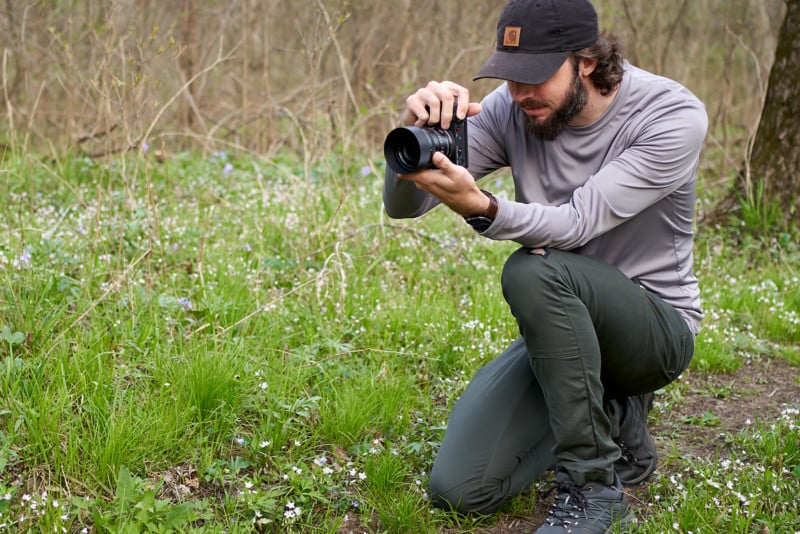
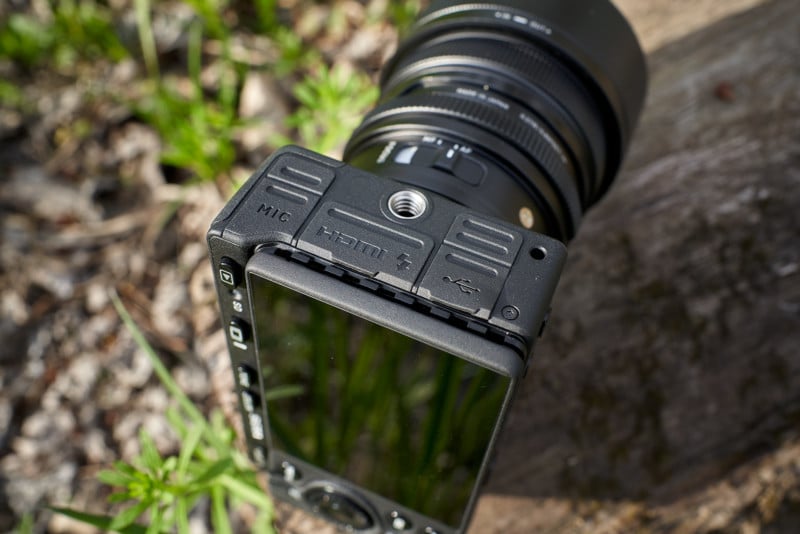
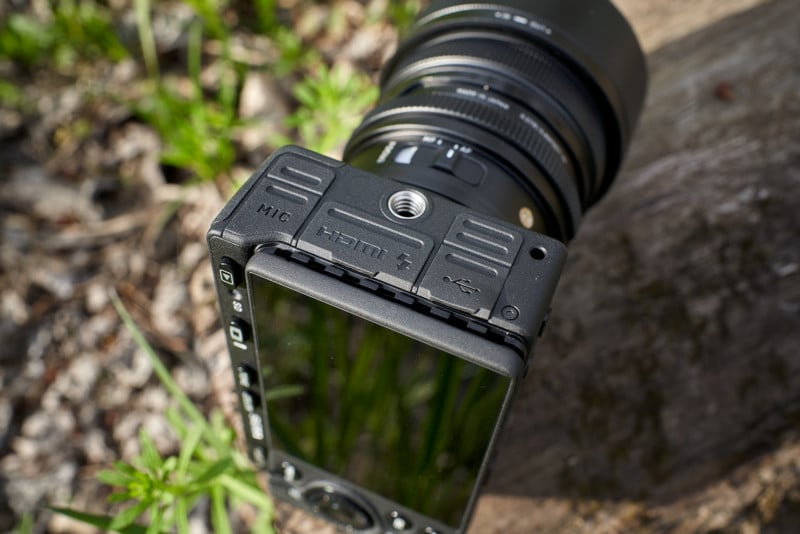
Two omissions in the design would go on to annoy me almost every day of shooting, and that’s having no multi-controller joystick on the back and no tilting rear screen. Without a multi-controller, moving the focus point takes extra steps. To do so, you need to press down, press AEL, move the focus point around with the D-pad buttons, then press the center button or half-press the shutter to exit. Yes, you can use the touchscreen, but like any other touchscreen found on cameras, it’s imprecise and only applicable to slow-paced shooting situations.
Having no tilting rear screen is self-explanatory in why that’s frustrating. I’ll tell you, in practice, it’s as bad of an idea as it sounds. I’m flipping up and down my screen all the time on other cameras if I’m not using the viewfinder. It does make me question what Sigma’s motivation was here. Did the designers really mean to sacrifice something so obviously useful and commonplace just so the company’s marketing materials could say it’s the smallest full-frame interchangeable lens camera? At what length were these sacrifices made just to make the claim?
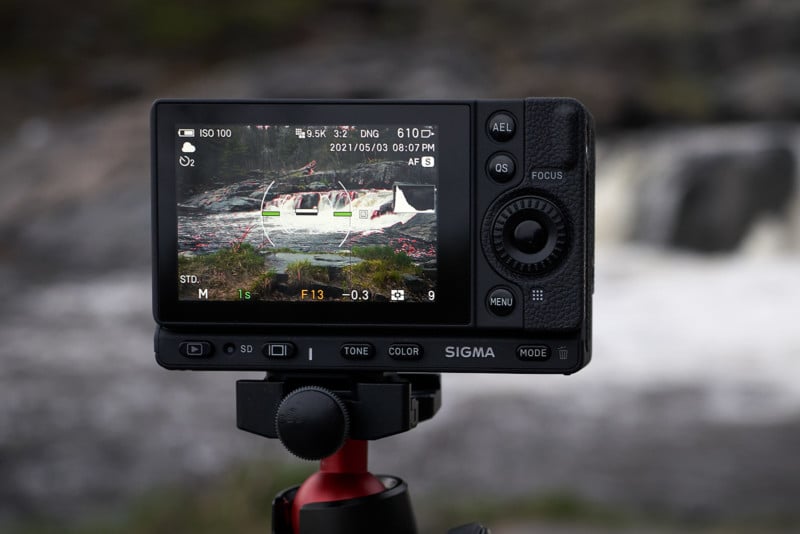
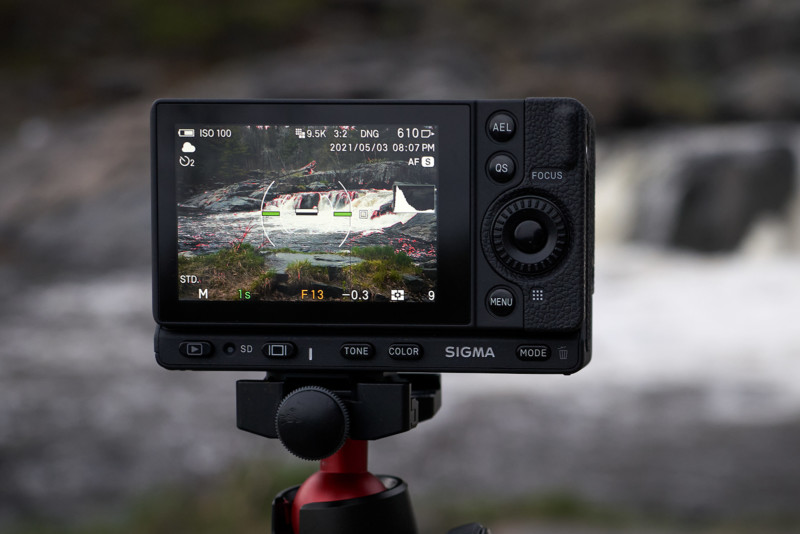

 35mm, f/16, 1s, ISO 100
 35mm, f/2, 1/200s, ISO 100
What sucks most about the Sigma fp L is that when feeling the weight, the materials, and the shape in your hands, all your senses tell you you’re are holding onto a special camera. Seeing how the modular pieces come together like the EVF-11 or HG-11 Hand Grip is really interesting and a finely executed concept. But then you turn it on.
AutofocusThe Sigma fp L supposedly has an upgraded autofocus system from the original fp which now includes 49 phase-detect autofocus points in addition to just the contrast-detection. I say “supposedly” because in practice, the Sigma fp L’s autofocusing is atrocious.
For moving subjects or non-moving subjects, AF-C is near unusable, and the quicker you learn that the quicker you can just use manual focus or AF-S and stop completely missing shots. As a bird photographer and someone who lives in 2021, I use AF-C on my cameras full-time. With the Sigma fp L, AF-C should not be an option because of its gross inaccuracy.

 400mm, f/6.3, 1/800s, ISO 250 – manually focused (cropped)
 767mm, f/13, 1/640s, ISO 640 – manually focused (cropped)
This leads to another issue: all the single-point focus area sizes — small, medium, and large — seem to act exactly the same. Each of them easily dismisses subjects in the foreground and time after time after time will simply focus on the background. It’s a little better when using the multi-point areas, but those require the subject to be a sizable portion of the frame with prominent isolation or it can be overlooked. Other than prioritizing “focus” or “release” with the autofocus, there’s no way to customize the tracking sensitivity and how much grab it has on objects.
In AF-S focus mode, things become more reliable but at the cost of not being able to keep up to date focusing if you or your subject move. Sure, this is how photography was done for a long time before AF-C more recently overcame its struggles, but this is a brand new camera and I expect much better.

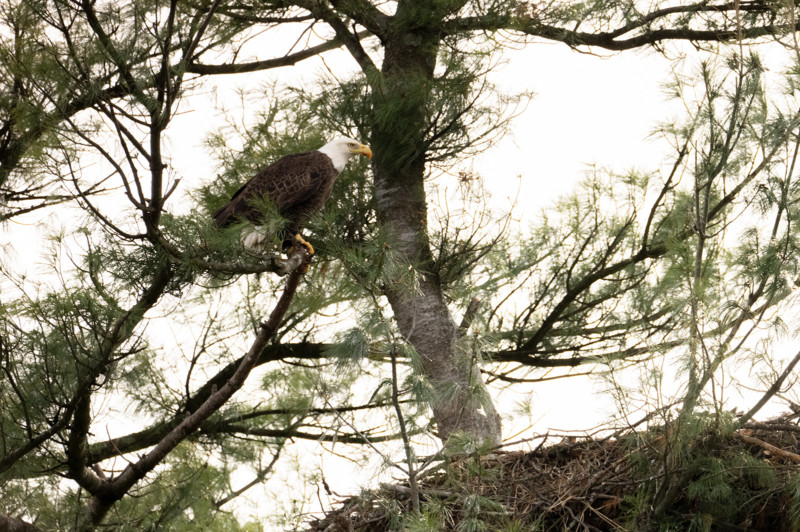 400mm, f/6.3, 1/800s, ISO 1000 (cropped)
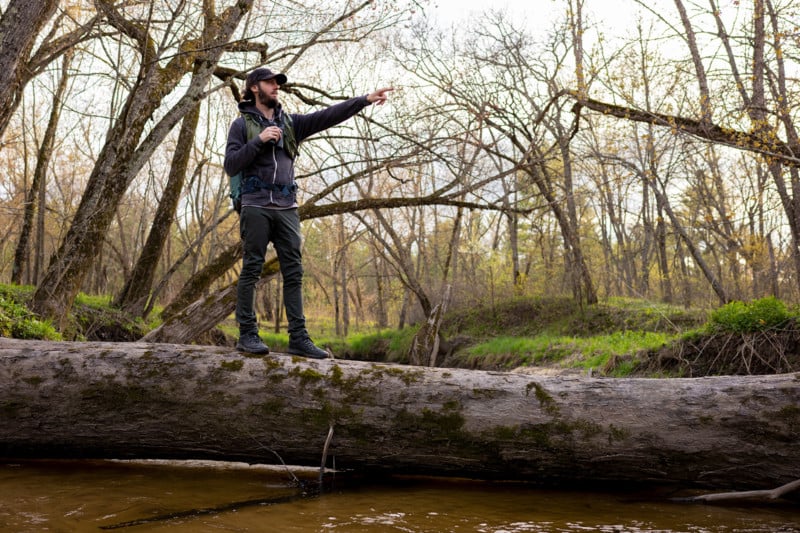 35mm, f/2.8, 1/160s, ISO 100
One thing this camera does right and deserves acknowledgment for is showing the focus peaking in autofocus. I wish all cameras did this.
Rolling ShutterWith no..

एक टिप्पणी भेजें
0 टिप्पणियाँ